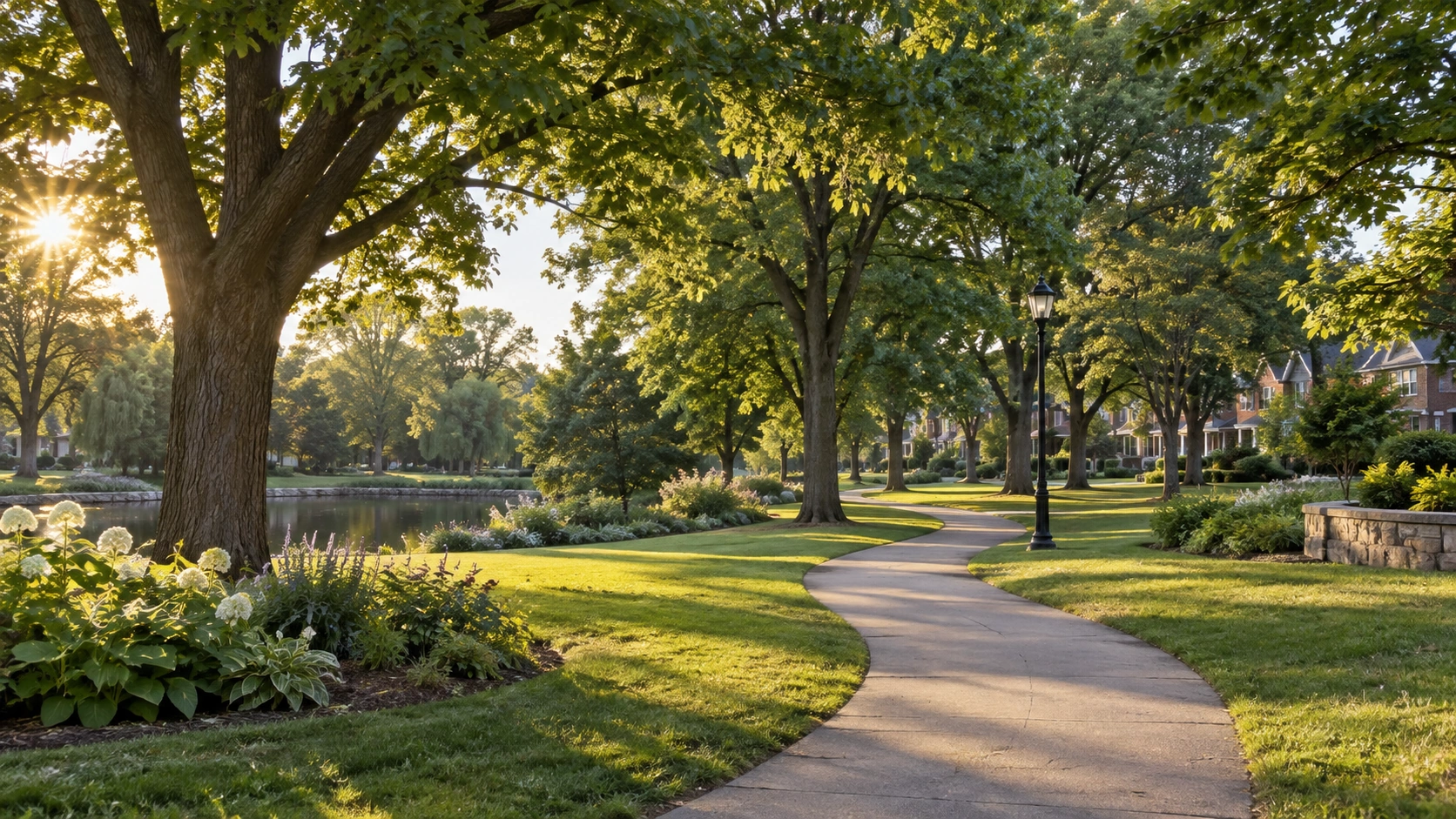
Lindenwood Park · St. Louis

From Telehealth Visit to State Card

Meet with a Missouri-licensed physician or nurse practitioner from home. Get certified, and we'll guide you through the state Patient ID card that follows.

MD / DO / NPCan Certify You
3 YearsCard Validity
$28.14State Fee
From Lindenwood Park

Quick facts, plainly stated

Read this before you book your visit.

Book an Appointment
  • Certification from an MD, DO, or nurse practitioner
  • Missouri has named qualifying conditions, plus physician discretion
  • A state Patient ID card is required before you can purchase
  • Once issued, your card is valid for 3 years
  • Up to 6 ounces per month once certified
Nearest Dispensary

Greenlight Dispensary on Chippewa Street is a short drive from Lindenwood Park's southern edge, reachable via Hampton Avenue or I-44.

Home Delivery

Some Missouri dispensaries offer delivery to certified patients — worth asking your dispensary directly once your card is active.

Step by Step

The path from visit to card

Speak with a provider

A licensed Missouri practitioner evaluates you over telehealth, in a conversation that goes beyond a simple intake form.

Submit your paperwork

Your certification lands in the state's Complia system, giving you 30 days to complete the Patient ID card application yourself.

Receive your ID

Once DHSS approves your application, your card is good for three years — and it's what a dispensary will actually ask for.

Hear From Patients

Reviews from the area

★★★★★

Clear from the first message about what to expect.

Nora K.
★★★★★

Booked on a lunch break, done before I went back to work.

Patrick S.
★★★★★

No pressure, no upsell, just a straightforward visit.

Diane R.
★★★★★

Would use again when it's time to renew.

Miguel A.
Good to Know

Answers before you commit

Drawn from Missouri's official guidance.

Is the certification itself enough to buy?

No. It qualifies you to apply for the state Patient ID card, and that card — not the certification paperwork — is what a dispensary actually verifies.

How does Missouri decide who qualifies?

Through a mix of named conditions — cancer, epilepsy, HIV/AIDS, and psychiatrist-diagnosed PTSD among them — and practitioner discretion for other chronic or debilitating conditions.

Do I need to visit an office in person?

Generally not. A real telehealth evaluation, whether by video or audio, with a licensed practitioner is typically sufficient under Missouri's rules.

What's the state charging these days?

$28.14 for the Patient ID card itself, per the current DHSS fee schedule. Your practitioner's visit fee comes separately.

How long until I need to renew?

Three years from the date your card is issued — longer than most states require.

Is living in Missouri a requirement?

No longer. Missouri eliminated its residency requirement, so eligibility doesn't hinge on your home address.

Which types of providers can certify me?

MDs, DOs, and nurse practitioners licensed in the state. Physician assistants aren't part of Missouri's list of authorized certifiers.

Is my monthly amount capped?

Standard allowance is 6 ounces a month, though a practitioner may specify more on your certification when appropriate.

What if my certification lapses before I apply?

It's only valid for 30 days for the purpose of applying for your card, so it's worth starting your state application soon after your visit.

Talking Points

What comes up during evaluations

Educational only — always defer to your practitioner's judgment.

Chronic pain that's lasted for years

Missouri names chronic conditions involving severe, persistent pain — comparable to what's seen with multiple sclerosis — as a qualifying category. Your practitioner determines whether your specific case fits.

A PTSD diagnosis

This one has a specific rule: the diagnosis needs to come from a state-licensed psychiatrist to count toward Missouri's named list. Bring documentation if you have it.

Anxiety or related conditions

Missouri's psychiatric-disorder category isn't limited to PTSD. Whether your diagnosis qualifies comes down to clinical judgment during your specific evaluation.

Sleep disruption

Not a named condition on its own, but a frequent topic that may fall under a practitioner's broader discretion depending on the full picture.

Something not on the list at all

Missouri leaves room for practitioners to certify other chronic or debilitating conditions beyond the named categories — ALS, Crohn's disease, and hepatitis C are examples that have qualified this way.

Conditions tied to muscle spasms

Named directly on Missouri's list, often discussed alongside conditions like Parkinson's or seizure disorders. Bring your relevant history to the visit.

The Neighborhood Itself

More than just a park

A Park That Almost Wasn't

The neighborhood's namesake park nearly became four-family housing units in the 1940s. A 1946 settlement between a developer and the local improvement association instead donated the land to the city — construction on the park itself didn't begin until a 1955 bond issue.

Older Than Its Own Park

The surrounding neighborhood predates Lindenwood Park by decades, tracing back to an 1798 Spanish colonial land grant, with real development not beginning until the 1880s along Fyler Avenue.

Streets Named for History

Several streets here memorialize real figures — including Civil War General Winfield Hancock and President Chester Arthur — alongside the local landowners and developers who shaped the area in the 1920s and 1930s.

A Small-Town Feel, City Address

Century Home plaques mark houses from the 1920s and earlier, and residents still gather for a spring flea market, summer lawn contests, and a fall festival held right in the park.

Applies Well Beyond This ZIP Code

This site is centered on Lindenwood Park, but Missouri's certification process is identical statewide, and residency isn't a requirement at all.

Lindenwood Park, St. Louis: An Overview

A Neighborhood Older Than Its Park

Lindenwood Park sits at the southwestern edge of St. Louis, bounded by Arsenal Street, Hampton Avenue, Chippewa Street, and Interstate 44. The land traces back to an 1798 Spanish colonial land grant, though the neighborhood itself wasn't built out until the 1920s and 1930s. Its namesake park, at the center of the community, was nearly developed as housing before a 1946 settlement preserved it for public use. For medical cannabis access, Lindenwood Park residents follow the same statewide Missouri process as anywhere else.

Certification Opens the Door; the Card Gets You In

Missouri requires two separate approvals. A physician, DO, or nurse practitioner first issues a certification under Article XIV of the Missouri Constitution. The patient then applies independently for a state Patient ID card through DHSS's Complia portal — and it's that card a dispensary checks, not the certification alone.

A Named List, With Practitioner Discretion Beyond It

Missouri's qualifying conditions include cancer, epilepsy, HIV/AIDS, and psychiatrist-diagnosed PTSD, among others, with practitioners also able to certify other chronic or debilitating conditions case by case. Full detail is available at the Missouri DHSS medical marijuana program page.
Official Missouri Resources

DHSS — How to ApplyOfficial program information
Qualifying Medical ConditionsOfficial list and criteria
DHSS Cannabis Program HomeDivision of Cannabis Regulation
Links go to official Missouri Department of Health and Senior Services sources only. Verify current details at health.mo.gov.

Take the next step.

We'll help you go from certified to card-carrying.

Book Your Visit